Step-by-Step Guide to the Market Selection Routine
Let’s walk through a simple, methodical routine for selecting the best melon, so you can walk out of the produce aisle with total confidence.
Step 1: The Initial Scan As you approach the watermelon bin, don’t touch anything yet. Just look. Scan the pile for melons that have a uniform, symmetrical shape. Immediately eliminate any that look lopsided or have soft, bruised spots.
Step 2: Check the Underside Gently roll the melon over to find its field spot. You are looking for that rich, creamy yellow color. If you see a white or greenish patch, it was harvested too soon and won’t have developed its full sugar content.
Step 3: Inspect the “Scars” Look closely at the rind. Do you see a network of brown, scratchy lines that look like a web? Don’t be fooled by appearances! This “webbing” is the melon’s badge of honor. It indicates excellent pollination, which is the number one predictor of a sugary, delicious interior.
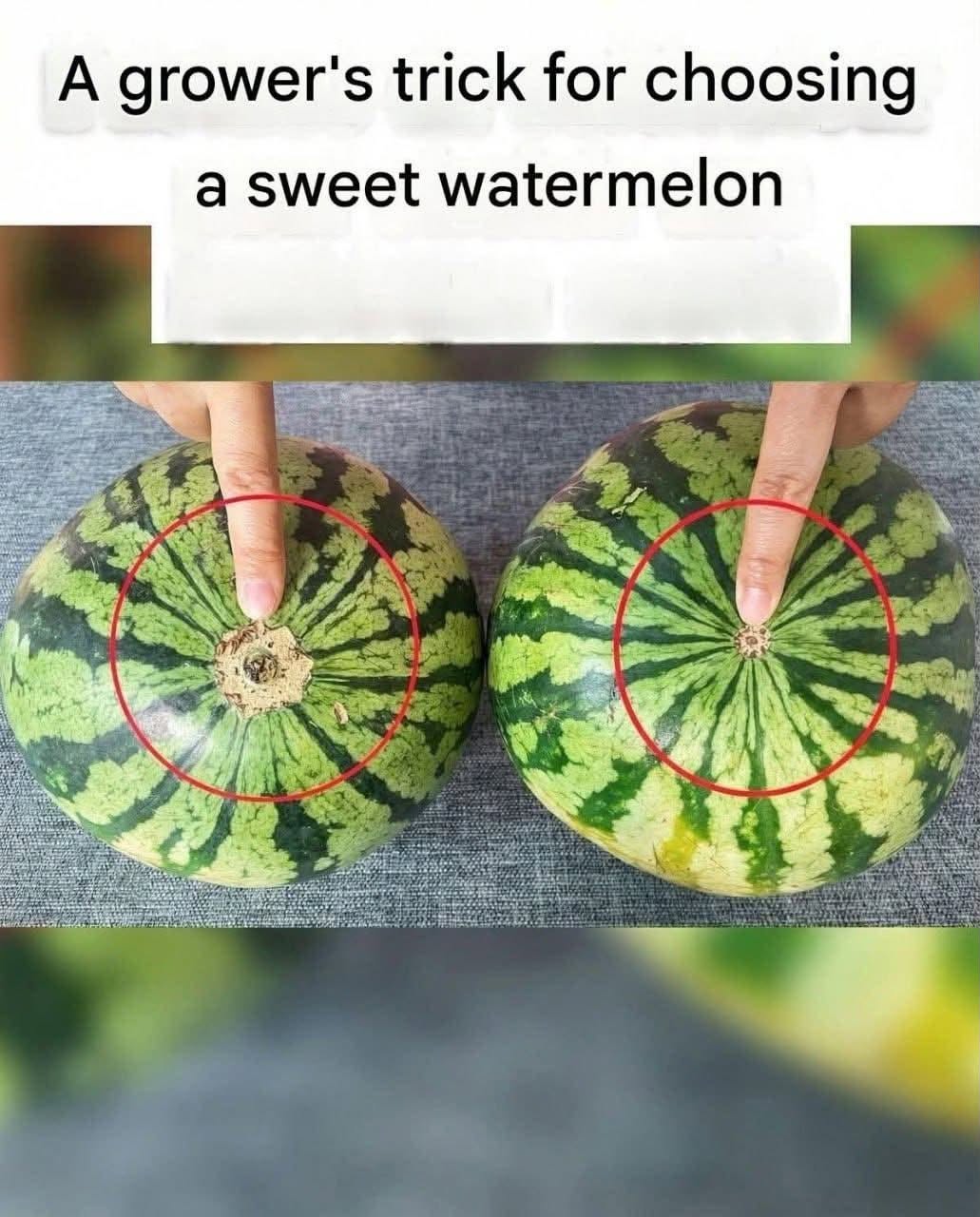
Step 4: The Stem and Heft Test Finally, look at the top. If the stem is green and fresh-looking, it was yanked from the vine prematurely. You want a dry, brown, shriveled stem. Once you’ve found a melon that passes the visual tests, pick it up. It should feel dense and heavy, like a solid bowling ball of pure hydration.
Pro-Tips for the Best Results
- Skip the thump: The famous “thump” test is highly subjective and depends entirely on the size of the melon and the strength of your knuckles. The visual clues are scientifically reliable and much easier to interpret.
- Don’t wash it early: Leave the natural, dusty “bloom” on the rind until you are ready to cut it. This natural coating helps preserve the melon’s freshness and protects it from bacteria.
- The Counter Trick: If you buy a melon that is almost perfect but feels a tiny bit firm, leave it on your kitchen counter at room temperature for 2 to 3 days. It will continue to soften and develop its sugars.
Fun Variations and Serving Ideas
Once you’ve brought home your guaranteed sweet melon, how do you serve it up? Here are a few fuss-free, crowd-pleasing ways to enjoy it, perfect for a quiet afternoon or a bustling community potluck.
- The Nostalgic Southern Pinch: This is a trick straight from my grandmother’s kitchen. Sprinkle a tiny, almost imperceptible pinch of flaky sea salt over your chilled watermelon slices. The salt doesn’t make it taste salty; it actually enhances the natural sweetness and makes the juice taste incredibly vibrant.
- The Potluck Hero Salad: Cube the watermelon and toss it in a large bowl with crumbled feta cheese, fresh torn mint leaves, and a light drizzle of balsamic glaze. It’s unfussy, visually stunning, and always the first dish to disappear at a summer gathering.
- The Zero-Waste Agua Fresca: Don’t throw away the rind or the slightly softer pieces near the center! Blend them with a little water, a squeeze of lime, and a touch of honey. Strain it, and you have a refreshing, resourceful drink that honors the whole fruit.
Frequently Asked Questions
How long will a whole watermelon last? A whole, uncut watermelon is incredibly resilient. It can sit on your kitchen counter for up to two weeks, or in the refrigerator for up to three weeks. Once you cut into it, wrap the remaining pieces tightly in plastic wrap or store them in an airtight container in the fridge, where they will stay fresh for 3 to 5 days.
Can I freeze watermelon? You can! While the texture will become a bit mushy when thawed (making it less ideal for fresh eating), frozen watermelon chunks are absolutely fantastic blended into smoothies or used as ice cubes in summer drinks.
Why do some watermelons have seeds and others don’t? Does it affect the taste? Seedless watermelons are created through a natural hybridization process, not genetic modification. In terms of taste and sweetness, there is virtually no difference between a seeded and seedless variety. Choose whichever is more convenient for your slicing and serving needs!
A Final Thought
Living alone has taught me that the small, everyday choices we make are the true foundation of our well-being. Taking an extra minute to read the quiet, visual clues of a watermelon isn’t just about getting a good snack. It’s about honoring the hard work of the farmers, practicing resourceful shopping, and treating yourself to a moment of pure, simple joy.
There is nothing quite like the satisfaction of slicing into a melon and knowing, with absolute certainty, that it’s going to be sweet, crisp, and perfect.
Have you ever been fooled by a bland watermelon? Or do you have a favorite, fuss-free way to serve summer fruit at your family gatherings? Drop a comment below and share your wisdom—I would absolutely love to read your tips and swap stories. And if you know a friend who is tired of guessing at the grocery store, please share this gentle guide with them. Here’s to sweet summers, calm minds, and many more delicious, refreshing days ahead!