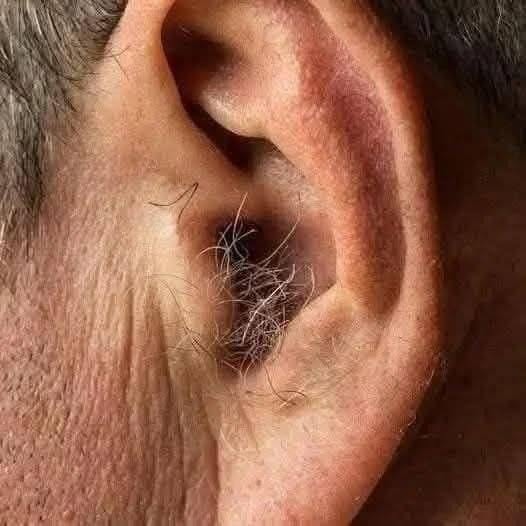
Family history is another important factor.
If your father, grandfather, or other close relatives developed noticeable ear hair as they aged, you are more likely to experience the same thing.
Scientists believe that genetics influence how sensitive hair follicles are to hormones, which explains why some people develop more ear hair than others.
A Natural Protective Barrier
Although many people remove ear hair for cosmetic reasons, it actually serves an important biological purpose.
The tiny hairs inside the ear help:
- Trap dust and debris.
- Reduce the entry of small insects.
- Help block certain bacteria and particles.
- Protect the sensitive inner ear.
In other words, ear hair is part of your body’s natural defense system.
Could Ear Hair Be a Sign of Good Circulation?
Some people believe that increased hair growth around the ears may indicate healthy blood circulation or improved nutrient delivery to hair follicles.
However, there is currently no strong scientific evidence confirming this theory. While good circulation supports overall health, ear hair growth is primarily influenced by genetics, hormones, and age.
Can Ear Hair Indicate a Health Problem?
In most cases, ear hair is completely normal.
However, researchers have explored whether excessive ear hair might be associated with certain medical conditions.
Some studies have suggested a possible link between heavy ear hair growth and cardiovascular disease in older men. However, the available evidence is limited, and more research is needed before any firm conclusions can be made.
Ear hair alone should not be considered a sign of heart disease.
Is It Safe to Remove Ear Hair?
Continued on next page: