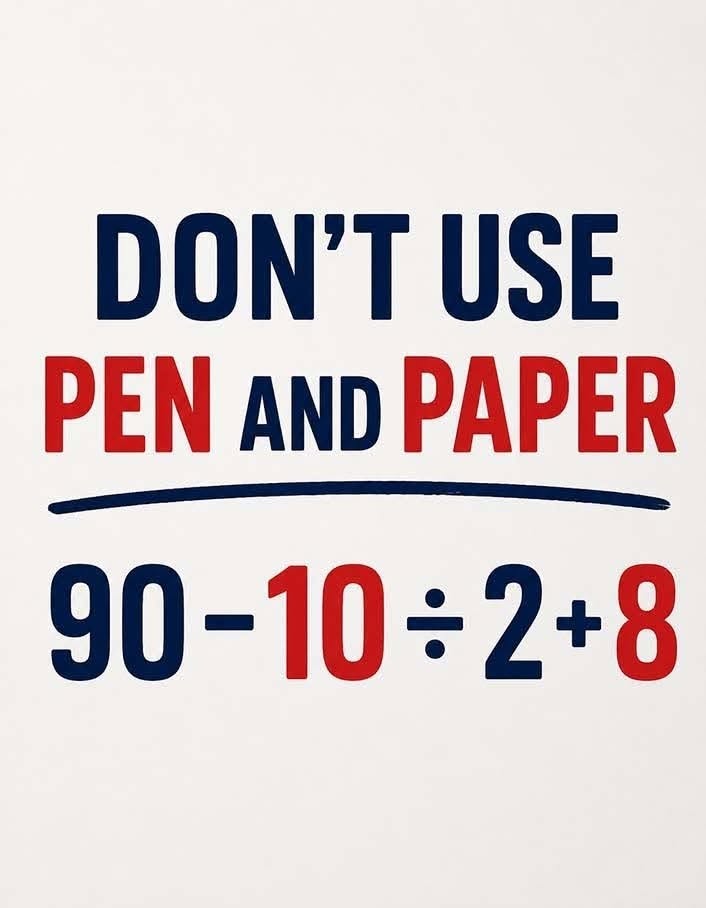
Here’s what each step actually adds up to:
- 1,000 + 40 = 1,040
- 1,040 + 1,000 = 2,040
- 2,040 + 30 = 2,070
- 2,070 + 1,000 = 3,070
- 3,070 + 20 = 3,090
- 3,090 + 1,000 = 4,090
- 4,090 + 10 = 4,100
The correct answer is: 4,100 — not 5,000!
Why Do So Many People Get It Wrong?
At first glance, most people see the repeated “+1000” steps and their brain automatically rounds up the total.
Our minds like patterns and shortcuts — which usually help us in everyday thinking — but in this case, the psychology of expectations misleads us.
When you see the sequence:
- +40
- +1,000
- +30
- +1,000
- +20
- +1,000
- +10
Your brain tends to focus on the thousands first and assumes the smaller numbers must total up to another thousand, even though they don’t.
That split-second assumption is why 5,000 is such a common — yet incorrect — answer.
A Valuable Mental Tip
Continued on next page: